
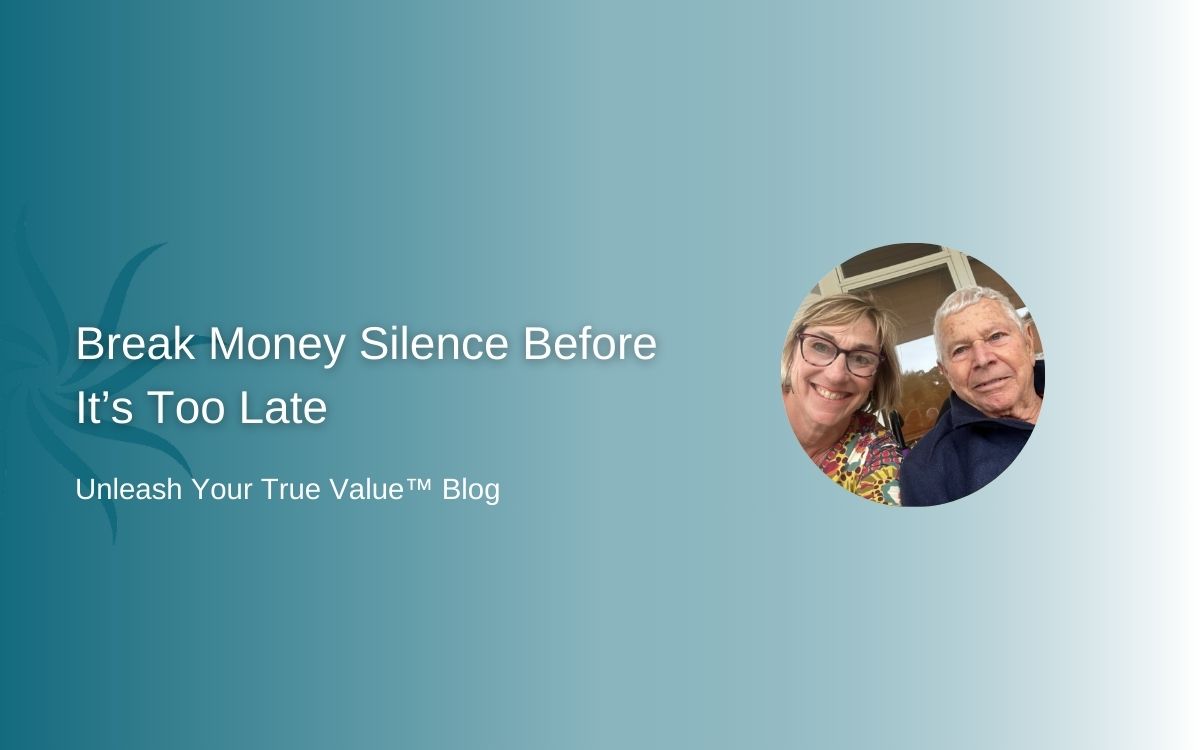
I sat in a chair next to my 94 year old dad at the Veteran’s Association Unit for dementia patients last week and realized deep conversations with him were something in our past. We laughed together, shared a meal, and took a spin (literally as he is in a wheelchair) around the facility. What we didn’t talk about was money or his legacy as he is no longer cognitively able.
Driving home, I felt sad, yet grateful. Grateful that he had the courage to break money silence with me before it was too late. I still have questions I would like to ask him that will go unanswered. Yet, I have the important answers. What values he wants me to live by, how he wants to be cared for in his last phase of life, and where his wealth will go after his death.
Growing up, I rolled my eyes every time dad said he wanted to discuss the family trust. Now, I’m thankful he cared enough to share his thoughts and plans with me.
If you are putting off breaking money silence with your partner, adult child, or aging parent, don’t. It’s vital that you break money silence before it’s too late.
Here are three ways to get the conversation started:
- Ask a curious question. Wonder out loud with the other person about why you don’t talk about money more often, or what their parents taught them about financial conversations. Often breaking money silence starts with understanding what makes it challenging for each of you.
- Listen to a podcast. Tune into a podcast about money and wealth and listen to it together. Then ask the other person to share their perspective on the topic. Consider listening to my podcast, Breaking Money Silence® (renamed Unleash Your True Value® in recent years) or one of the many others that touch on the subject of the emotional side of finance.
- Read a book. Breaking Money Silence®: How to Shatter Money Taboos, Talk More Openly about Finances, and Live a Richer Life, was written to be a roadmap for engaging in meaningful conversations across generations. Read a chapter together and complete the exercise at the end. It’s a great structured way to engage in interesting, and sometimes fun financial dialogues.
My dad may not be able to have these conversations anymore, but his passion for doing so has inspired my work and will continue to do so for many years.
Thanks dad. I owe you one!